
In the dynamic landscape of UX, the fundamental principle of accessibility and inclusion reigns supreme. It’s the bedrock on which the success of a product or service rests, transcending barriers of physical, mental, and environmental diversities.
Guiding this pursuit is the Web Content Accessibility Guidelines (WCAG), an indispensable framework that orchestrates digital experiences. Although it caters to all users, its emphasis on empowering individuals with disabilities is undeniable. Our mission as design leaders is to forge a path where every potential user, irrespective of context, is not merely accommodated but celebrated.
Delving into this realm, we encounter the intriguing interplay between accessibility and usability, as articulated by Frank Spillers. While they share common ground, they are distinct entities. Usability gauges the effectiveness, efficiency, and satisfaction of designs. In essence, usability envelops accessibility since an inaccessible product is inherently unusable for those with disabilities. However, the user experience of people with disabilities remains a peripheral concern in usability. On the contrary, accessibility’s essence lies in ensuring an equitable user experience for all, irrespective of the means they employ to access the product or service.
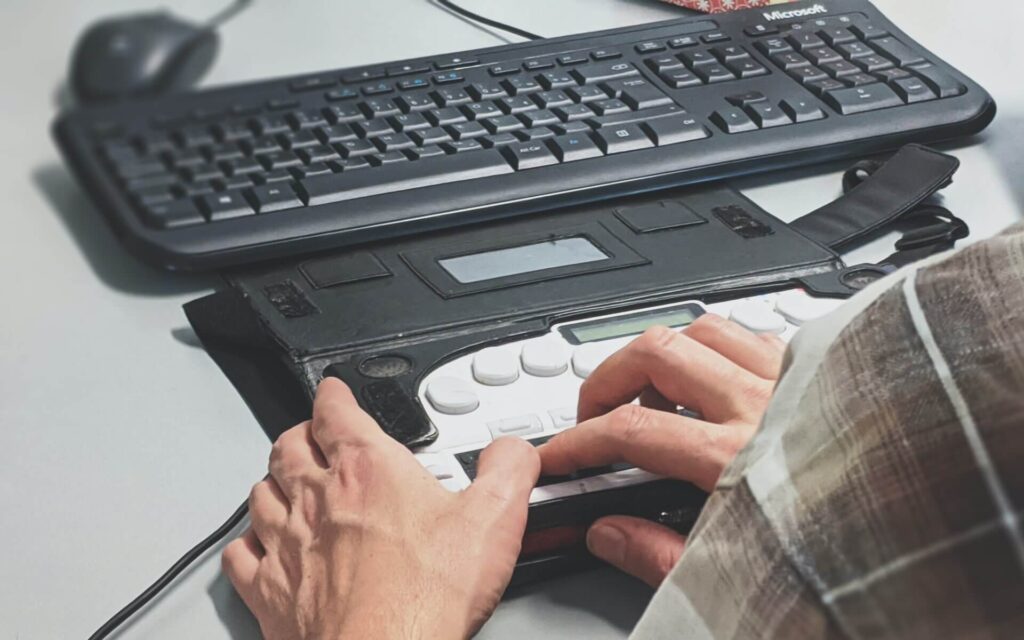
The ripple effect of accessibility is profound, extending its benefits to every user, not just those with disabilities. Take, for instance, video captions designed to aid those with hearing impairments. They also cater to the needs of individuals watching content on mute, a scenario all too common in the social media landscape. High-contrast, legible text designed for visually challenged users doubles as a boon for individuals using applications outdoors in harsh sunlight. The truth is, each user, regardless of their abilities, encounters challenges in diverse contexts. By embracing universal design principles, we unlock products and services that resonate universally—offering assistance, enjoyment, and serenity.
Sadly, the significance of accessibility often gets overshadowed. Yet, statistics from the World Health Organisation’s 2011 report resonate loudly: Ignoring accessibility equates to excluding a staggering 15% of our global population. Beyond the ethical imperative, legal ramifications loom large, especially in jurisdictions like the European Union. But transcending the legal sphere, designing for accessibility is an astute strategic move, encapsulating benefits like:
– Elevated SEO through Semantic HTML.
– Extended reach across devices and settings.
– A fortified brand image, exuding inclusivity and empathy.
As we navigate this journey, a crucial facet surfaces—anticipating the spectrum of accessibility challenges. From visual impairments like colour blindness to motor challenges encountered by wheelchair users, auditory hurdles, and the potential triggers for seizures, our compass must encompass all dimensions. Moreover, the boundaries of ability can blur unexpectedly, be it through incidental factors like sleep deprivation or environmental factors such as limited connectivity underground.
In closing, Billy Gregory, a seasoned Accessibility Engineer, provokes us with a poignant query: When UX caters to only a fraction, should it not be termed SOME User Experience
or even… SUX
? Our odyssey is clear: Let’s architect experiences that transcend limitations, embracing the vast tapestry of human diversity.